

B-1/E-23, Mohan Co-Operative Industrial Area, Mathura Road, Delhi-110044, India
- Uncategorized
- 05-Jan-2026
- -
- 0 Comments
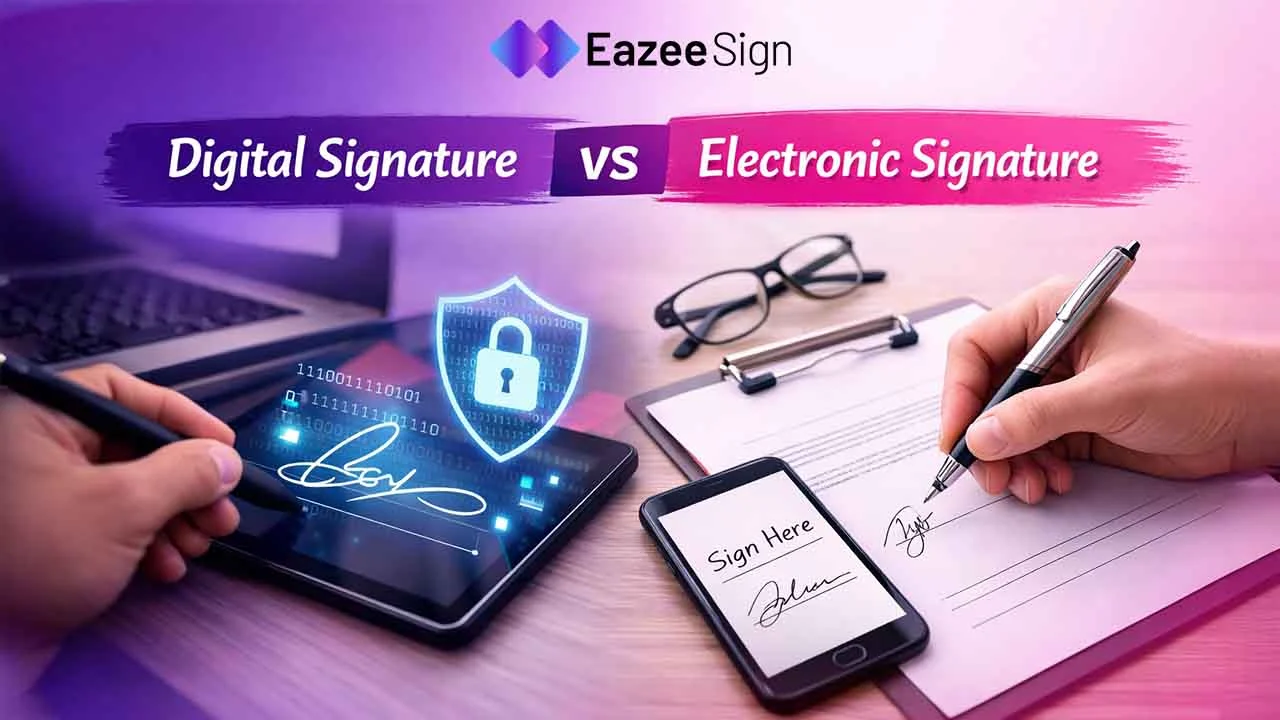
Digital Signature vs Electronic Signature: Electronic signatures and digital signatures are more convenient and quicker methods of signing documents online. Electronic signatures are easy and indicate your intent. Digital signatures provide a sense of security. Both of these are legal but digital signatures are more secure to use on important documents.
Over the years, the way we sign documents has completely changed. Pens and paper are no longer the default. Today, businesses sign files online. You’ve probably noticed that digital signatures and e-signatures are often used interchangeably. However, there are important legal and technical differences between the two.
Although both help you sign documents faster, they work in different ways and serve different security and compliance needs. In this blog post, we will explain digital signature vs electronic signature software so you can choose the option that best fits your needs.
What Is an Electronic Signature?
An electronic signature means you show approval or agreement using an electronic method. It can be very simple. For instance,
- Typing your name at the end of an email is an e-signature.
- Clicking “I Agree” on a website.
- Drawing your signature using a mouse or touchscreen
- Uploading an image of your handwritten signature
They are all examples of e-signatures. They show that you agreed to what’s in the file. Electronic signatures focus on speed. They are easy to use and widely accepted. Most e-signatures are used for:
- HR documents
- Sales contracts
- NDAs
- Internal approvals
- Customer forms
They work well where the risk is low and especially when trust already exists between parties.
What Is a Digital Signature?
A digital signature is a highly advanced, more secure type of e-signature. Built using encryption technology, it proves two things:
- Who signed the document?
- That the document was not altered since the signing of the same.
Digital signatures rely on something called public key infrastructure (PKI) and digital certificates. This technology generates a unique code that associates a signer with a document. If someone changes the file after signing, that change becomes obvious. If someone edits the file later, the signature breaks. In this way, tampering is immediately identified.
Consider it to be a lock with your name written on it. You can only lock the document with your key and anyone can test your key to demonstrate that it is you.
Digital signatures are used when:
- Legal proof is required
- Data integrity matters
- Regulations must be followed
Common use cases include:
- Government filings
- Financial documents
- Legal contracts
- Compliance-heavy industries
Difference Between Digital Signature and Electronic Signature
The main difference is security and verification. While electronic signatures focus on convenience, digital signatures software focus on trust and protection. Let’s simplify.
Electronic signature = intent to sign
Digital signature = proof of identity + intent + document integrity
That is the real gap.
Digital Signature vs Electronic Signature: Key Differences
Compare security, identity verification, tamper detection, and use cases side by side.
| Feature | Electronic Signature | Digital Signature |
| Security | Basic protection | Strong encryption with certificates |
| Identity Verification | Simple methods (email, SMS code) | Trusted third-party certificates |
| Tamper Detection | Limited | Any edits break the signature |
| Legal Strength | Legally binding in most cases | Stronger legal weight due to identity verification |
| Technology Used | Simple tools | Cryptography, PKI, digital certificates |
| Best Use Cases | HR forms, internal approvals, routine paperwork | Legal contracts, financial reports, government filings |
E-Signature vs Digital Signature: Feature Comparison
- Level of Security
E-signatures give basic protection. Whereas digital signatures use encryption and certificates to make sure that the signer is real and the document hasn’t been altered.
- Identity Verification
Many e-signatures check identity with simple methods such as email or phone codes. Digital signatures verify identity with trusted certificates issued by a third party.
- Tamper Detection
If someone edits a digitally signed document, that change breaks the signature. E-signatures don’t always show this level of tamper evidence.
- Legal Strength
Both e-signatures and digital signatures are legally binding in many countries. However, digital signatures carry stronger legal weight because of identity authentication.
- Technology Used
While e-signatures rely on simple tools, digital signatures rely on cryptography.
- Use Cases
E-signatures: Everyday contracts, onboarding forms, approvals
Digital signatures: Regulated documents, contracts requiring high trust, financial/legal files
Are Digital Signatures and Electronic Signatures Legal?
Yes, both are legal in many regions. However, laws vary by country. In India:
- Electronic signatures are valid under the Information Technology (IT) Act, 2000.
- Digital signatures are strongly recognized for compliance
In the US:
- ESIGN Act supports electronic signatures
- Digital signatures are used for regulated sectors
In the EU:
- eIDAS defines different signature levels
- Digital signatures fall under “qualified signatures”
The rule is simple. Higher risk documents need stronger signatures.
When to use each type of signature?
Choose the right type of signature depending on risk, compliance, and workflow needs.
Use electronic signatures when:
- You need quick approvals
- The document is not sensitive
- You want the simplest user experience
They are perfect for:
- HR offer letters
- Internal approvals
- Consent forms
- Vendor agreements
- Routine paperwork
They save time, reduce paperwork, and improve workflow.
Use digital signatures when:
- You need stronger security
- Legal proof matters
- You must meet compliance rules
- Documents are sensitive
They are ideal for:
- Government submissions
- Bank contracts
- High-value business deals
- Financial reports
- Legal contracts
- Audit-ready documents
They provide peace of mind and strong legal backing.
Digital Signature vs Electronic Signature for Businesses
Businesses often need both. As not every document needs encryption but not every document can be simple. Smart companies choose based on use case.
- HR teams may use e-signatures.
- Legal teams may use digital signatures.
- Finance teams may use both.
Ultimately, the goal is balance. Speed where possible. Security where required.
Choosing the Right E-Signature Platform
A good platform should fit your workflow and not slow it down. After all, the right choice saves time and reduces risk. Ultimately, it should offer:
- Both electronic signatures and digital signatures
- Secure storage
- Audit trails
- Easy user experience
Look for tools that support:
- Multiple document types
- Compliance needs
- Scalable usage
Choosing the Right E-Signature Platform
The debate of e-signature vs digital signature is not about which is better. It is about which is right. Electronic signature app is faster but lacks security, whereas digital signature is secure. They are both essential and effective.
Eventually, understanding the difference helps you choose wisely and sign with confidence!




