

B-1/E-23, Mohan Co-Operative Industrial Area, Mathura Road, Delhi-110044, India


- Uncategorized
- 24-Feb-2026
- -
- 0 Comments
Digital signatures are everywhere now. Contracts, HR paperwork, Vendor approvals, even simple internal forms.
Most companies handle documents online today. Sending PDFs over email, signing them digitally, and getting approvals remotely. That’s the normal workflow now.
But here’s the thing. Many people still misunderstand the meaning of a digital signature.
Some people think it just means signing on a screen. Like drawing your signature with a mouse. Others think it’s the same as an electronic signature.
But the reality is different.
A digital signature software is actually a security system built into a document. It verifies who signed it and locks the file so nobody can secretly change anything later.
Sounds technical? Right… But the logic behind it is too simple to understand.
Let’s break down it.
What is the meaning and purpose of Digital Signature?
Imagine a digital signature as an encrypted seal added or attached to a digital file. If someone signed a document once, it ensures three things.
Authenticity – First of all, it confirms the identity of the person signing the document.
Integrity – Second, it makes sure that the document has not been altered after signing.
Non-repudiation – Third, the person who has signed the document cannot later deny that they did not sign the document.
That last one matters a lot in legal situations.
Now here’s something people often miss.
A digital signature is not just a visual mark like a handwritten signature. There is actual cryptographic technology running behind it. The system generates a unique code linked to both the document and the signer.
If someone edits even a single word later… the signature breaks.
Yes, even a small change can hamper the authenticity of the document and leave a digital footprint which is traceable.
Digital Signature vs Electronic Signature
A lot of time it has been observed that people get confused with both of these terms. But technically, they are not the same.
An electronic signature software shows that the signee agrees with agreement
For example:
typing your name in a document
drawing a signature on a phone screen
clicking an “I Agree” checkbox
That’s it.
These methods show intent to sign. But they usually don’t have strong security verification behind them.
On the other hand, a digital signature is a encryption based technology which also helps in identity verification. It works on PKI which means Public Key Infrastructure, and ensures that the document has not been altered by anyone once signed.
Here is the basic difference.
| Factor | Electronic Signature | Digital Signature |
|---|---|---|
| Technology | Simple electronic mark | PKI + hash algorithms |
| Security | Basic | High |
| Tamper Detection | Not always available | Built in |
| Legal Strength | Depends on use | Strong legal backing |
So, a simple way to remember this. All digital signatures are electronic signatures. But not every electronic signature is a digital signature.
How Digital Signatures Work
The technology may sound complicated. But honestly, the process and logic behind it is quite simple. When you sign a document digitally, four things happen at that time:
1. Hashing the Document
Now hashing the document; When a person signs a document, the technology behind the digital signature creates a Hash Value, and it is like a fingerprint on the document. If even a very small change has been done, it will create a completely different hash value, which can be detected easily if someone modified the document later.
2. Encrypting with the Private Key
Next, the hash gets encrypted using the signer’s private key. This encrypted hash becomes the digital signature. Only the signer has access to that private key. That’s what makes the signature secure.
3. Attaching the Digital Certificate
After that, a digital certificate is attached to the document. This certificate is issued by a trusted authority known as a Certificate Authority (CA).
It contains information like:
- the signer’s identity
- the public key
- verification from the certificate authority
- Basically, it confirms the signer’s identity.
4. Verification by the Recipient
When the recipient opens the document, the system runs a verification process. It decrypts the signature using the public key and compares the hash values.
If both values match, the document is authentic.
If they don’t match, the document has been changed after signing.
Simple check. Happens in seconds.
Most users don’t even notice it.
Why Businesses Use Digital Signatures
Digital signatures are not just about convenience. They solve several real business problems.
Legal Recognition
Digital signatures are legally valid in many countries.
For example:
- Information Technology Act 2000 in India
- eIDAS Regulation in Europe
- ESIGN Act in the United States
Because of these laws, digitally signed documents are accepted for contracts and official agreements.
In some cases, they carry even stronger proof than handwritten signatures because they include an audit trail.
Better Document Security
Paper documents can be altered easily. Someone can replace a page. Or modify a scanned document. Digital signatures make this almost impossible to hide.
Change even one character after signing… the signature becomes invalid.
That’s the whole point.
Fraud Prevention
Digital signatures rely on verified identities and certificate authorities. Because of this structure, impersonation becomes much harder. Every signature can be traced back to a verified person.
Faster Document Workflows
Traditional document signing takes time.
- Printing documents.
- Sending them through the courier.
- Waiting for signatures.
- Scanning them again.
Anyone who has handled paperwork knows how slow this gets. But digital signatures remove these steps. Now business can send the documents and get it signed back within minutes. There are a lot of companies now which used digital signature platforms and software to upload documents, send signing requests, and track approvals online.
Remote Work and Paperless Processes
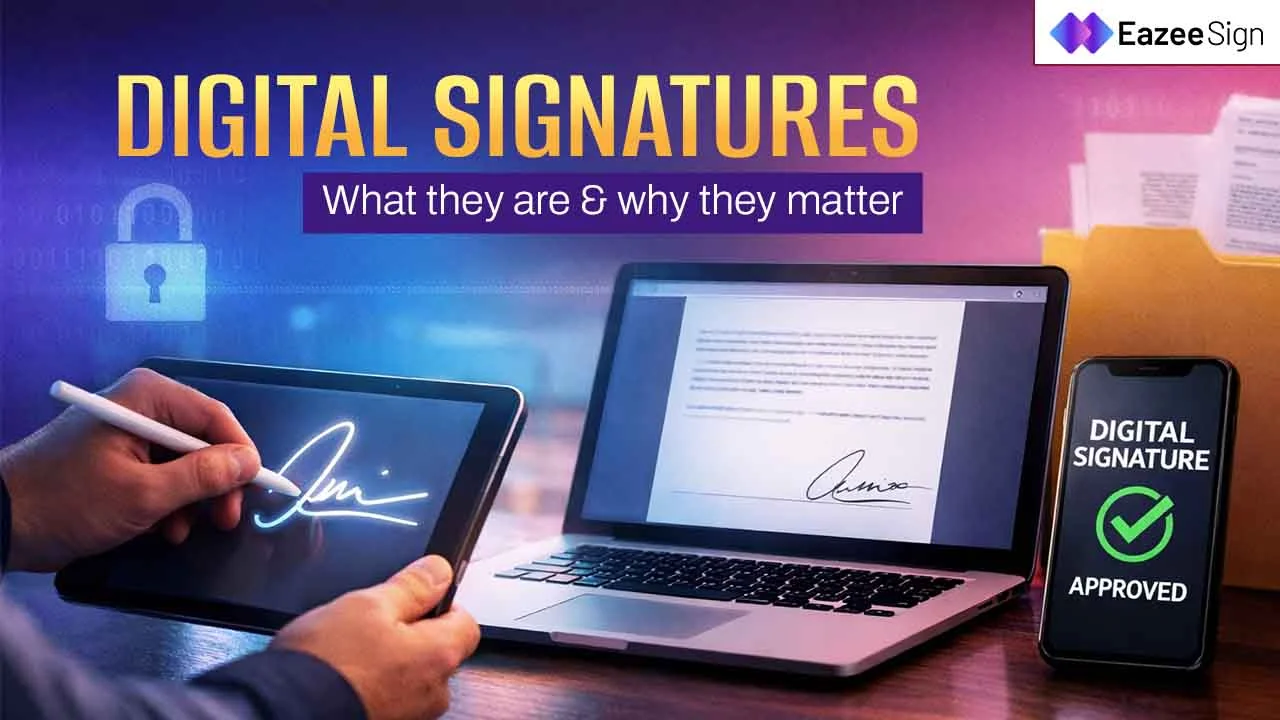
Another big advantage is flexibility. People can sign documents from anywhere using a laptop, Phone, or tablet.
No need for physical meetings just to sign a paper. It also reduces paper usage and helps companies move towards paperless operations.
Conclusion
In the process of document signing, a digital signature provides security, convenience, and legal validation all together. It helps to verify the identity of a signer, protect the authenticity of a document, and, most importantly, it makes the approvals much faster.
Inshort, if there is any business that deals with agreements, onboarding clients or new hires, vendors, and contracts, digital signatures have become a fast and secure way to manage the entire document signing process online.
And honestly… once teams start using them, they rarely go back to paper.



