

B-1/E-23, Mohan Co-Operative Industrial Area, Mathura Road, Delhi-110044, India
- Electronic Signature
- 09-Sep-2026
- -
- 0 Comments
Switching from pen and paper to digital signing still makes some businesses nervous and that’s fair enough. A signature carries real legal weight and handing that over to software means trusting something you can’t physically hold. So here’s the actual question worth asking: how strong is eSignature security, once you get past the marketing language and look at what’s really happening underneath?
This piece breaks down what genuinely keeps a digital signature safe and what’s worth checking before trusting any tool with a signed contract.
What eSignature Security Actually Means
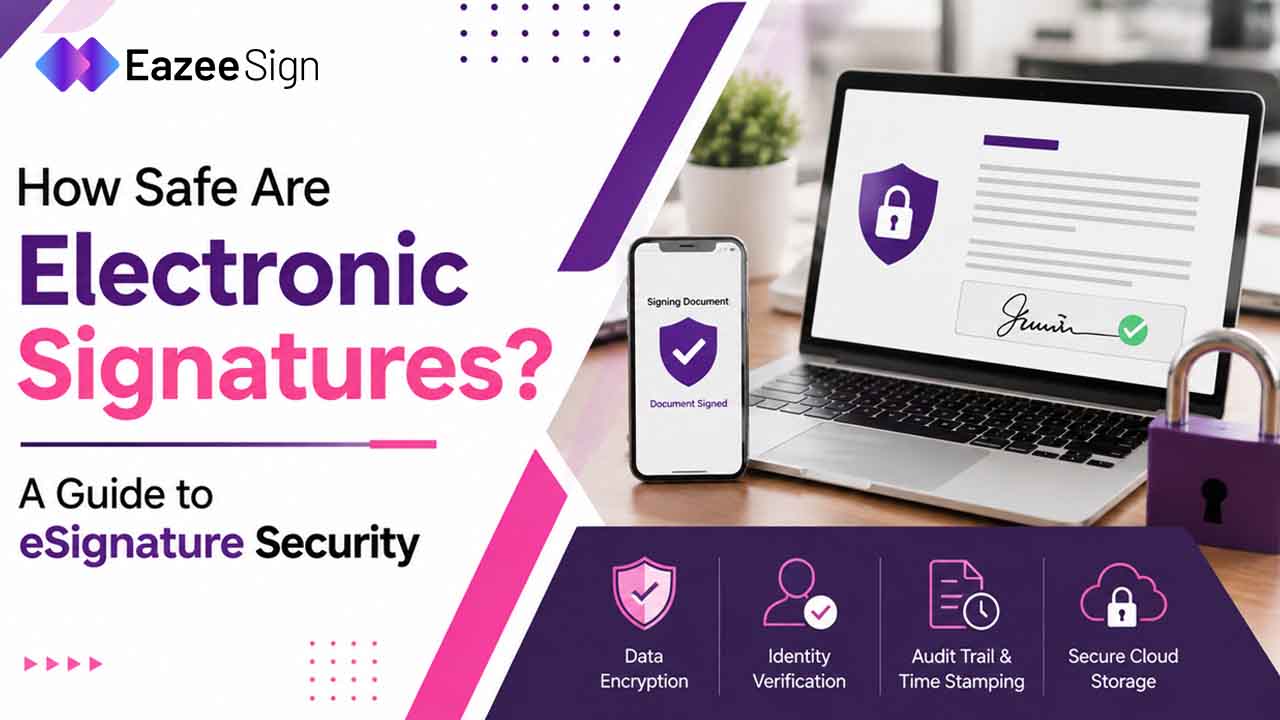
Strip it down and security here comes from three things working together. Encryption protects the document itself. Verification confirms who actually signed it. And a detailed record proves exactly what happened and when. Miss any one of these three and the whole setup gets a lot shakier than it looks on the surface.
A properly built electronic signature software doesn’t just grab a signature and move on. It wraps that signature in enough protection that tampering becomes nearly impossible without leaving some kind of trace behind. That’s really what separates a tool worth trusting from one that just sounds convincing in a sales pitch.
Is an Electronic Signature Actually Safe Compared to a Handwritten One
Something that catches people off guard here — a handwritten signature is honestly pretty easy to forge with a bit of practice. And once it’s sitting on paper, there’s basically no record of who signed it, when, or from where. Anyone could get their hands on that document without much trouble.
An electronic signature safe setup works completely differently. Every signature comes attached to a timestamp, an IP address, often a verified identity check too. If someone ever questions whether a contract was signed legitimately, there’s an actual trail pointing back to the truth. Paper never gave anyone that.
Read Here – Guide to Different Types of Electronic Signatures
How Encryption Protects Your Documents
Encryption’s doing most of the heavy lifting here, even though nobody really sees it happening. While a document’s moving between a sender and signer, it needs to be encrypted in transit — meaning anyone intercepting that connection can’t actually read what’s inside. Once it’s signed and sitting in storage, it should stay encrypted there too, protecting it from anyone poking around a server without permission.
Skip this step and a document’s basically exposed at multiple points along its journey. Good eSign software treats encryption as something non-negotiable, not a feature reserved for the expensive plan.
Why Audit Trails Matter So Much in eSignature Software
An audit trail is basically a running log attached to every signed document. Who opened it. When they viewed it. What time they signed. Sometimes even which device or IP address was used.
This sounds like a small detail until there’s an actual dispute. Someone questions whether a contract was signed properly and a solid audit trail clears it up fast. Without one, all you’ve got is someone’s word against another’s, which doesn’t hold up well if things get contested down the line.
How Identity Gets Verified in Electronic Signature Software
Confirming the right person actually signed something is a massive piece of this whole puzzle. Decent electronic signature software usually verifies identity through email confirmation, a one-time password sent to a phone, sometimes multi-factor checks for anything higher stakes.
Weaker tools skip all of this — letting anyone holding a link sign a document with zero real check on who they are. That gap turns into a genuine problem the moment a signature gets challenged later, especially on contracts tied to real money or legal obligations.
Where Legal Validity Fits Into the Security Picture
Security and legal validity are more tangled together than people assume. A signature isn’t just about being hard to fake — it also has to hold up under whatever legal framework applies where you’re operating. In India, that usually means alignment with the IT Act. Other places have their own recognized standards to meet.
A compliant eSignature software builds its security features around meeting these requirements directly — not as something bolted on afterward. If a tool can not explain clearly how it stays compliant, that’s usually worth treating as a red flag rather than a minor gap.
What Actually Makes eSign Software Secure
A handful of concrete things separate genuinely secure tools from ones just claiming to be. Look for recognized certifications — SOC 2 and ISO 27001 both require independent audits of how a company handles data, not just a badge someone stuck on a homepage.
Reusable templates play a quieter role in security too, actually. Standardized templates cut down the chance of a document getting altered wrong or missing a required field somewhere, keeping the signing process consistent instead of leaving room for manual slip ups. Beyond that, check for clear encryption practices, a visible audit trail and straightforward identity verification before handing over anything sensitive.
Clearing Up Common Myths About Digital Signature Software
A lot of the hesitation around digital signature software comes from misunderstanding rather than real risk. One myth going around is that electronic signatures are easy to fake or hack. In reality, a properly secured system is considerably harder to tamper with than a physical signature ever was.
Another one — people assume electronic signatures are not legally binding. In most places, including under India’s IT Act, they carry the exact same legal weight as something signed by hand, as long as the software meets proper compliance standards. Clear those two myths up and the actual security picture looks a lot stronger than the hesitation would suggest.
How EazeeSign Handles eSignature Security
EazeeSign builds its security around recognized standards instead of vague promises. It’s backed by SOC 2 and ISO 27001 certifications, both requiring independent verification of how data actually gets protected, not just internal claims nobody checks.
Beyond the certifications, EazeeSign includes AI-based risk analysis that flags unusual clauses or missing details in a contract before it even goes out, catching issues early instead of after everyone’s already signed. Reusable templates keep documents consistent too, cutting down room for manual error across repeated paperwork like offer letters or vendor agreements. Put together, it’s a decent example of what security-focused eSign app software should actually look like in practice.
Final Thoughts
Electronic signatures, built on real encryption, verified identity and a proper audit trail, tend to be safer than the paper process they’re replacing. The trick is knowing what to check before trusting any tool with your contracts — certifications, compliance, a genuinely transparent security process. Those things matter a lot more than a polished interface. Once you know what to look for, switching to digital signing stops feeling risky and starts feeling like the obvious move it probably always was.
Frequently Asked Questions
Are electronic signatures legally binding?
Yes. In most regions, including under India’s IT Act, electronic signatures hold the same legal standing as handwritten ones, as long as the software meets recognized compliance standards.
Can an electronic signature be hacked or forged?
It’s a lot harder than forging something handwritten, especially once proper encryption, identity verification and audit trails are in place.
What certifications should I actually look for in eSignature software?
SOC 2 and ISO 27001 are strong signals, since both require independent audits of how a company handles data security.
How does identity verification actually work here?
Most tools rely on email confirmation, one-time passwords, or multi-factor authentication to confirm who’s signing before anything gets finalized.
Are templates in eSign software actually secure?
Yes — reusable templates improve security by keeping documents consistent and cutting down the chances of manual errors or missing fields.
What happens if someone questions whether a signature was legitimate?
A detailed audit trail, with timestamps, IP addresses and verification steps, provides the evidence needed to settle it.




