B-1/E-23, Mohan Co-Operative Industrial Area, Mathura Road, Delhi-110044, India


- Digital Signature Software
- 01-Sep-2026
- -
- 0 Comments
Small businesses don’t have the luxury of inefficiency. A large enterprise can absorb a week-long contract turnaround. A growing ten-person team can’t — not when a delayed vendor agreement holds up a project, or a slow onboarding process means a new hire’s first week starts with paperwork instead of work.
eSign software was built for exactly this problem. Not just for speed — but for the kind of operational consistency that lets a small team punch above its weight on documentation, compliance, and professional presentation.
The challenge is choosing the right one. The market is crowded, pricing structures vary significantly, and the features that matter most for a small business aren’t always the ones that get the most attention in product comparisons.
This guide cuts through that.
What Small Businesses Actually Need From eSign Software
Before looking at specific platforms, it’s worth being clear about what small businesses need — because it’s different from what enterprises need.
Large organizations evaluate signing platforms on API depth, SSO integration, and workflow automation at scale. Small businesses have simpler priorities.
Documents need to close faster. The process needs to be simple enough that every team member uses it consistently without training. Legal validity needs to be airtight — because a small business facing a contract dispute doesn’t have a legal department to absorb the fallout. And the cost needs to make sense at current volume, not just at hypothetical future scale.
Four things. Speed, simplicity, legal validity, and predictable pricing. Any eSign software evaluation for a small business should start there.
Key Features to Look For in eSign Software for Small Businesses
Legal Compliance and Document Validity
This is non-negotiable — and it’s where platforms diverge most significantly.
In India, esignature software online compliant with the IT Act 2000 produces legally valid documents for commercial transactions. Aadhaar-based eSign provides government-verified identity authentication — essential for financial instruments, HR documentation, and compliance filings where identity verification carries legal significance.
A platform that isn’t built around these standards doesn’t produce legally defensible signatures for documents that will face scrutiny. The interface may look identical. The legal standing is not.
Multi-Party Signing With Sequence Control
Most small business agreements involve more than one signatory.
A service contract that needs a client signature followed by a director countersignature. A vendor agreement requiring procurement and legal sign-off before it goes external. An employment contract that routes to the employee first, then HR.
Good eSign software enforces these sequences automatically — each party receives the document only when the previous step is complete. No manual tracking. No missed steps. No documents signed out of order and requiring restart.
Automated Reminders and Real-Time Status Tracking
Chasing signatures manually is one of the most time-consuming parts of running a small business — and one of the least valuable.
eSign software app platforms handle follow-up automatically. Reminders go out at defined intervals without anyone initiating them. The sender sees live document status — sent, opened, signed, declined — from a single dashboard. The time previously spent on follow-up emails gets redirected to actual work.
AI-Powered Document Review
This is where modern eSign software goes beyond what most small business owners expect.
Reviewing a vendor contract or client agreement carefully takes time that small teams often don’t have. AI-powered document review changes that equation — summarizing lengthy agreements in plain language, extracting key clauses automatically, and flagging potential risks before signing happens.
For small businesses without dedicated legal resources, that capability is significant. It doesn’t replace legal advice on complex matters. But it ensures routine agreements get proper attention without consuming hours of management time.
Transparent Pricing Without Hidden Charges
This matters more for small businesses than any other buyer type.
Enterprise buyers negotiate custom contracts and absorb unexpected charges into large software budgets. Small businesses don’t. A pricing model that charges per envelope, gates key features behind higher tiers, or adds charges for SMS authentication and API access creates cost unpredictability that small teams can’t plan around.
The right esignature software online for a small business has flat, transparent pricing — what you pay at signup is what you pay as usage grows.
Benefits of eSign Software for Small Businesses
Faster Deal Closure
A contract agreed verbally on a Friday that can’t be signed until Monday is a deal that had the weekend to become uncertain. eSign software removes that window — documents go out immediately, clients sign from their phones, and deals close before momentum fades.
For sales-driven small businesses, that speed translates directly to revenue recognized faster.
Professional Client Experience
The signing experience is a touchpoint. A client who receives a clean, mobile-friendly signing link — one that works without account creation or app downloads — starts the business relationship with a different impression than one who’s emailed a PDF and asked to print it.
Small businesses that want to compete with larger players on professionalism use eSign software app interfaces to create a seamless client experience at a fraction of the cost of building one manually.
Reduced Administrative Overhead
Document logistics — printing, scanning, filing, chasing, version management — consume staff time that small businesses can’t afford to waste.
eSign software handles all of it. Templates remove the preparation overhead. Automation handles routing and reminders. Centralized storage makes retrieval instant. The administrative overhead that follows high document volume scales with the platform, not with headcount.
Stronger Compliance and Audit Readiness
Small businesses are not exempt from regulatory requirements — and in some sectors, they face the same compliance obligations as large enterprises with far fewer resources to meet them.
A complete, tamper-evident audit trail — capturing signer identity, authentication method, device, IP address, and document state at signing — is what satisfies regulatory inquiries without requiring manual record reconstruction. For businesses operating under RBI, IRDAI, or MCA guidelines, that audit infrastructure isn’t optional.
Cost Savings That Compound Over Time
The direct cost savings — paper, ink, couriers, storage — are real but modest. The compounding savings are more significant.
Staff hours recovered from document follow-up. Errors caught before submission rather than after. Deals closed faster because signing isn’t a bottleneck. Legal exposure reduced because every document has a defensible audit trail. These savings accumulate month over month in ways that dwarf the subscription cost of any esignature online software.
What to Look for in eSign Software Pricing
Small business eSign software pricing typically follows one of three models.
Per envelope — you pay for each document sent. Predictable at low volume, expensive as usage grows, and creates an incentive to ration document sends that directly undermines the efficiency benefit.
Per user per month — flat rate per team member with unlimited documents. Scales predictably with headcount rather than document volume. Better for growing teams.
Flat subscription — a fixed price covering the full team and full document volume. The most predictable model for small businesses with variable monthly document counts.
Watch for add-on charges. Identity verification, SMS authentication, custom branding, advanced analytics, and API access are standard features on some platforms and paid extras on others. Calculate the realistic annual cost including these before comparing headline prices.
Why EazeeSign Works for Small Businesses
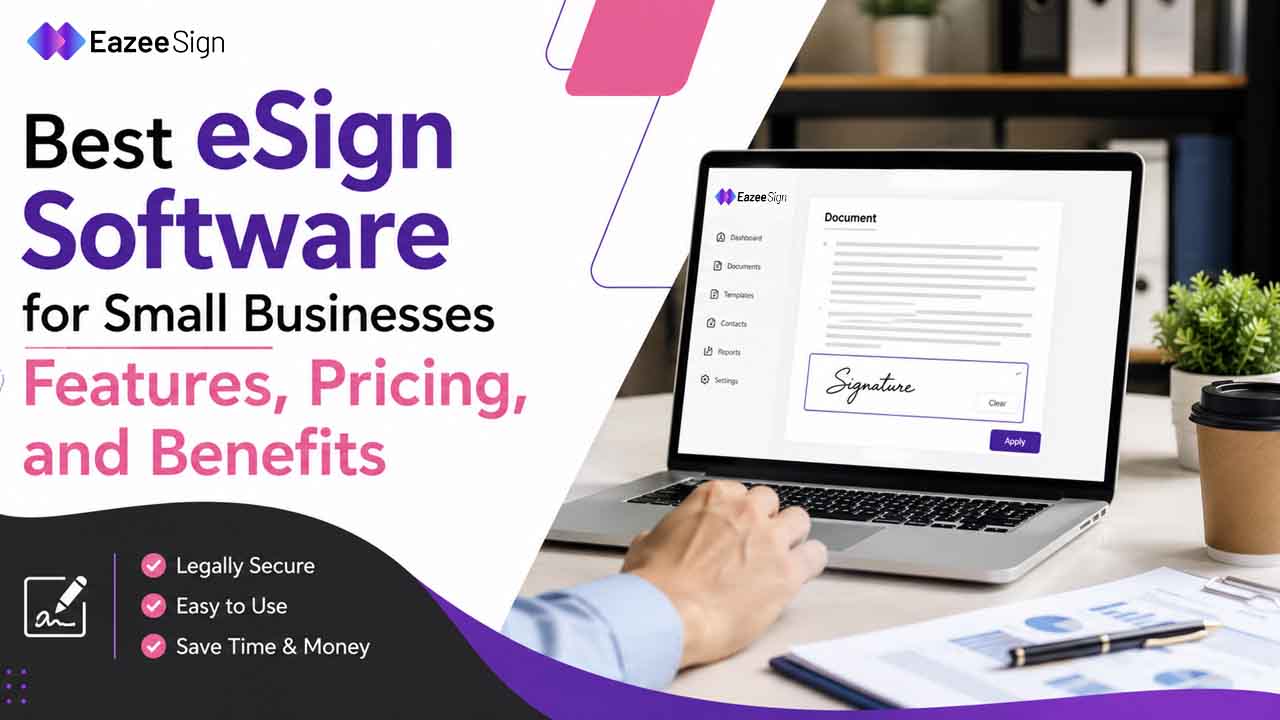
EazeeSign is built around the four priorities small businesses actually have — speed, simplicity, legal validity, and transparent pricing.
IT Act 2000 compliance and Aadhaar eSign support are built into the platform — not available as premium add-ons. Multi-party signing with sequence control, automated reminders, real-time tracking, and tamper-evident audit trails are standard across all plans. AI Document Summary, Key Clauses Analysis, Risk Detection, and Document Generation give small teams access to document intelligence that previously required dedicated legal resources.
Pricing is flat and transparent. No envelope caps. No hidden charges for identity verification or API access. Advanced analytics, custom branding, document groups, and unlimited storage are included from the entry plan upward — not gated behind enterprise tiers that cost three times as much.
For small businesses that want professional document workflows without enterprise pricing, eSign software that checks every box without a long feature comparison is a straightforward decision.
Frequently Asked Questions
1. What is eSign software and how does it work for small businesses?
It’s a platform that lets you prepare, send, and sign documents digitally — no printing required. Documents travel as secure links, signatures are applied cryptographically, and completed records are stored automatically with audit trails attached.
2. Is eSign software legally valid for business contracts in India?
Yes. Platforms compliant with IT Act 2000 produce legally valid signatures for commercial transactions. Aadhaar eSign adds government-verified identity authentication for high-value agreements.
3. Can eSignature software online handle multiple signatories?
Yes. Signing sequences are defined upfront and enforced automatically — each party receives the document only when the previous step is complete, with no manual coordination required.
4. Is eSign software app affordable for small businesses?
Yes — particularly platforms with flat transparent pricing and no envelope caps. The subscription cost typically replaces printing, courier, storage, and follow-up expenses that add up to more annually.
5. How secure is esignature software online for sensitive business documents?
Platforms certified under SOC 2 and ISO 27001 apply 256-bit AES encryption in transit and at rest. Tamper-evident seals flag any change made after signing — making digitally signed documents more secure than scanned physical signatures.